
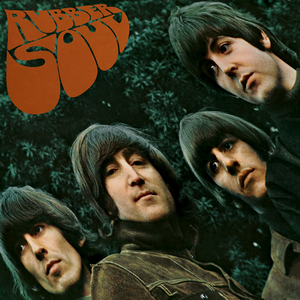
Rubber Soul is the sixth studio album by the English rock band the Beatles. It was released on 3 December 1965 in the United Kingdom on EMI's Parlophone label, alongside the non-album double A-side single "Day Tripper" / "We Can Work It Out". The original North American release, issued by Capitol Records, included ten of the fourteen songs and two tracks that had been withheld from the band's Help! (1965) album. Rubber Soul received positive critical response and achieved commercial success, topping sales charts in both Britain and the United States.
Recording sessions took place in London over a four-week period beginning in October 1965. This was the first album the Beatles recorded without concurrent concert, radio, or film commitments. The album is often categorized as folk rock, particularly in its North American version, and incorporates elements of pop, soul, and folk music. The title is derived from the term "plastic soul," reflecting the band's acknowledgment of their interpretation of African-American soul music. Following A Hard Day's Night (1964), it was the second Beatles LP to contain only original material.
The songs on Rubber Soul reflect the Beatles’ developing lyricism and experimentation with instrumentation, including sitar, harmonium, and fuzz bass, as well as brighter guitar tones. The album marked a shift in the band's approach to albums as artistic works, an approach they continued with Revolver (1966) and Sgt. Pepper's Lonely Hearts Club Band (1967). Four songs omitted from the Capitol release, including the February 1966 single "Nowhere Man," were later included on the North American album, Yesterday and Today (1966).
Rubber Soul influenced contemporary musicians and contributed to a broader focus on creating albums with consistently high-quality songs rather than singles alone. The album has been recognized for expanding the lyrical and musical possibilities of pop music and for its role in the development of styles such as psychedelia and progressive rock. It has appeared on multiple critics’ best-album lists, with Rolling Stone ranking it fifth on the magazine's 2012 list of the "500 Greatest Albums of All Time." In 2000, it was placed at number 34 in the third edition of Colin Larkin's book "All Time Top 1000 Albums." The Recording Industry Association of America (RIAA) certified the album 6× platinum in 1997, indicating shipments of at least six million copies in the United States, and the British Phonographic Industry (BPI) certified it platinum in 2013 for UK sales since 1994.
This User-contributed text is available under the Creative Commons By-SA License; Source: Last.fm.