
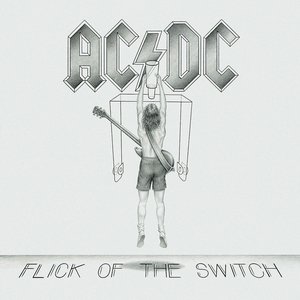
"Flick of the Switch" is the ninth studio album by the Australian hard rock band AC/DC. Released on 19 August 1983, it was the band's third album to feature lead vocalist Brian Johnson and the last to feature drummer Phil Rudd until his return on "Ballbreaker" in 1995. The album was reissued in 2003 as part of the AC/DC Remasters series.
AC/DC recorded the album at Compass Point Studios in the Bahamas, where the band had previously recorded "Back in Black" in 1980. Unlike their three preceding studio albums, which were produced by Robert John "Mutt" Lange, "Flick of the Switch" was produced by the band itself. According to statements made by band members, the album was intended to return AC/DC to a more direct and unpolished sound. Engineer Tony Platt later recalled that there was a desire within the band to adopt a simpler and more immediate approach to recording.
The album is characterized by a relatively dry production style, with less use of studio effects than on its predecessor, "For Those About to Rock (We Salute You)". Guitarist Angus Young stated in a 1984 interview that the band sought a natural and powerful guitar sound while avoiding excessive use of echo, reverb, and noise-processing technology.
The recording process was affected by internal tensions within the band. During the sessions, drummer Phil Rudd left the group after completing his drum tracks. Accounts from band associates and later biographies describe personal and professional difficulties involving Rudd during this period. Former Procol Harum drummer B.J. Wilson was brought in as a contingency measure, although his recordings were ultimately not used. Producer and engineer Tony Platt later described the sessions as difficult, citing tensions and fatigue among band members.
Following Rudd's departure, AC/DC conducted extensive auditions in the United States and the United Kingdom before selecting Simon Wright as the band's new drummer. Other musicians reported to have auditioned included Simon Kirke and Paul Thompson. Wright appeared in promotional videos for the songs "Flick of the Switch", "Nervous Shakedown", and "Guns for Hire", and participated in the subsequent concert tour.
The album's songs continue themes commonly associated with AC/DC's music, including rebelliousness, confidence, and sexual innuendo. "Bedlam in Belgium" was inspired by an incident at a concert in Kontich, Belgium, where tensions arose after authorities attempted to enforce a local curfew. During the supporting tour, "Guns for Hire" was used as the opening song in the band's live set. The period also saw changes within the band's management and support staff.
The cover artwork for "Flick of the Switch" was created by artist Brent Richardson and is based on a sketch by Angus Young. It depicts Young hanging from a large electrical switch and was intended to reflect the album's straightforward musical approach. According to former tour manager Ian Jeffrey, Atlantic Records was dissatisfied with the design and declined a proposal to produce the cover with embossed printing similar to that used for "Back in Black".
Upon release, "Flick of the Switch" received mixed reviews from critics. The album reached number 4 on the UK Albums Chart and number 15 on the Billboard 200 in the United States. It was later certified platinum by the Recording Industry Association of America (RIAA).
Contemporary reviews varied in their assessments. In Rolling Stone, David Fricke wrote that the album did not match the impact of "Back in Black" and suggested that some of its musical ideas resembled earlier AC/DC material. Canadian music journalist Martin Popoff later described it as a high point of the Brian Johnson era, praising its return to a rawer sound. Steve Huey of AllMusic argued that the band appeared to be experiencing a creative slowdown during this period. Malcolm Young later commented that the album had been assembled quickly and expressed reservations about its overall quality.
A review in Cash Box described the title track as a straightforward hard rock song built around a guitar riff by Angus Young and Brian Johnson's vocal performance, noting its consistency with the song's lyrical themes.
This User-contributed text is available under the Creative Commons By-SA License; Source: Last.fm.